


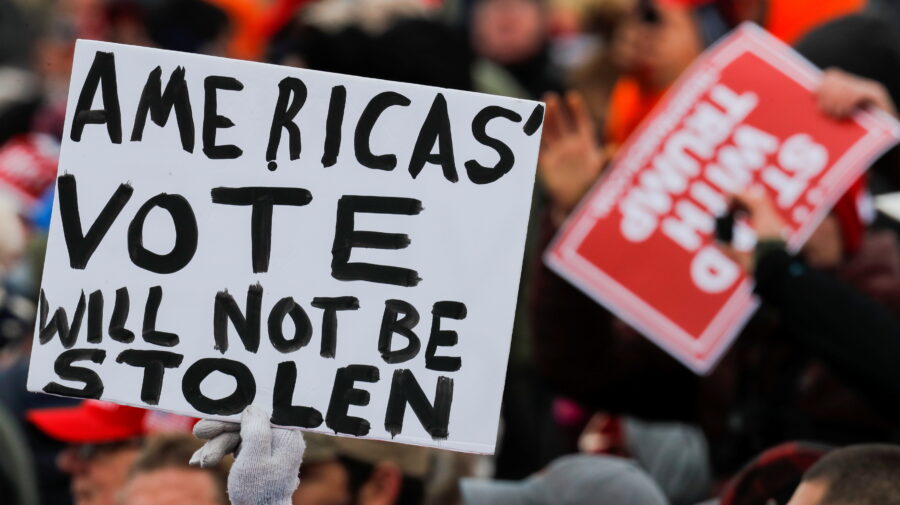
Former US President Donald Trump’s “Big Lie” has become both a test of loyalty and means of self-preservation for Republicans. But has Trump’s disinformation-fueled denial of the 2020 vote’s legitimacy created a new entry in the playbook for world leaders to discredit elections?
On Monday, Peruvian presidential candidate Keiko Fujimori alleged in a press conference that supporters of socialist rival Pedro Castillo, who has overtaken her in the vote’s ongoing count, had committed systemic fraud. Fujimori’s claims drew criticism at home and abroad for the thin evidence underlying them, including from leading political scientist Adriana Urrutia.
On Sunday, Israeli Prime Minister Benjamin Netanyahu said the coalition deal set to end his tenure as the country’s longest-serving leader was the result of “the greatest election fraud in the history of the country, in my opinion in the history of any democracy.” Netanyahu, who has been indicted for bribery, fraud and breach of trust in three separate cases, did not provide evidence.
Netanyahu and Fujimori’s accusations drew understandable comparisons to Trump. A CNN en Espanol video by Juan Carlos López asked, “What do Trump and Netanyahu have in common with Fujimori?” before concluding that none is willing to accept defeat. Meanwhile, The New York Times’ Roger Cohen noted alarming commonalities between Netanyahu and Trump’s election fraud claims, highlighting an ominous warning by an Israeli security agency’s chief of “extremely violent and inciting discourse.” (A right-wing nationalist march is due to go ahead in Jerusalem on June 15, after being rescheduled twice due to concerns of violence.)
But endless comparisons to Trump have their limits. Fujimori has been in the political spotlight long before Trump; she’s the daughter of Peru’s jailed former dictator Alberto Fujimori, having first served ceremonially as his First Lady in the 1990s and later entering Congress herself in 2006. (Fujimori has said she would pardon her father if elected.) Peru’s politics have also been marked by multiple crises in the years since Alberto Fujimori’s downfall in 2000.
And while Netanyahu may have adopted some rhetoric from Trump, he may have taken a step — albeit a small and tentative one — back yesterday. His Likud Party issued a statement via Twitter affirming Netanyahu’s “complete confidence” in “the vote counting process” and vowing a peaceful transfer of power, while at the same time doubling down on criticism of Netanyahu’s likely successor, Naftali Bennett of the right-wing Yamina party. — Chris Looft